Color, movement and feeding
Watch how butterflies rest, feed and move between plants. Light and warmth can influence how active they appear.
Color, life cycles and easy observation
A Mindo butterfly garden, or mariposario, brings tropical butterflies and their life cycle into a managed habitat where visitors can observe small details at close range. It is a visual, gentle nature experience that works well for families, photographers and mixed-interest groups.
Butterfly activity, visible species and life-cycle stages change with weather and current garden conditions. Confirm the operating garden, access, timing and availability for your date instead of expecting a fixed display.
Choose the butterfly garden for a low-effort nature stop focused on color, movement and metamorphosis. It fits naturally after early birdwatching or beside another relaxed Mindo activity when the group wants biodiversity without a demanding trail.
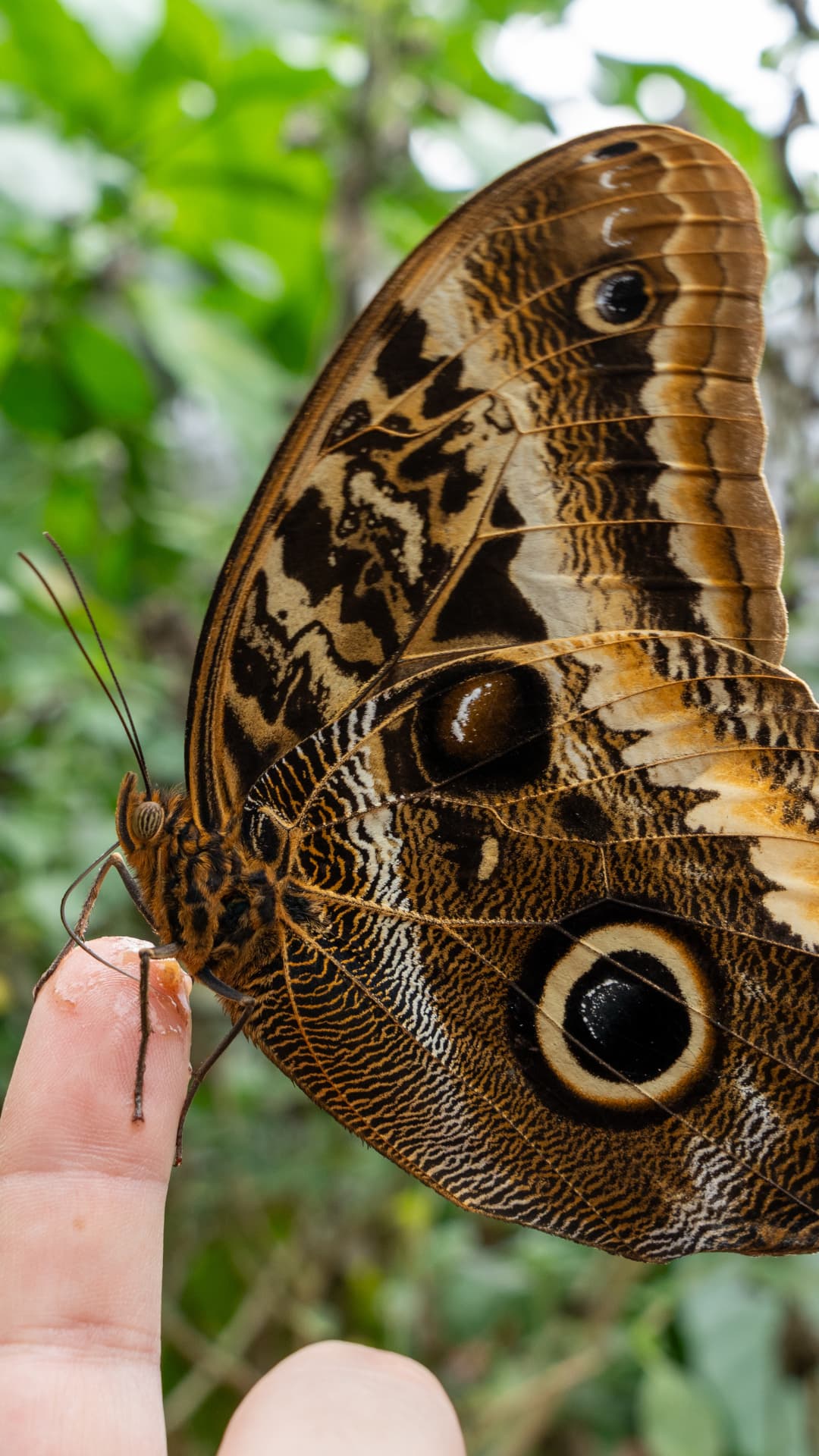
Slow observation reveals more than a quick walk-through. Look for behavior, habitat and different stages of metamorphosis.
Watch how butterflies rest, feed and move between plants. Light and warmth can influence how active they appear.
When present, eggs, caterpillars, chrysalises and newly emerged adults make metamorphosis easier to understand.
The garden helps explain why different plants matter for feeding, reproduction and the survival of each stage.
Phones and cameras can capture fine wing patterns without a long hike when visitors move carefully and avoid touching.
Use the garden as a flexible nature block around the activity that matters most to your group.
A strong choice for visitors who want wildlife context, close observation and an accessible visual experience.
It is usually gentler than a forest trail, although current paths, steps and mobility access still need confirmation.
If birding is a priority, protect the early morning first and consider butterflies after bird activity slows.
Share your date and group details so the current garden experience can be checked accurately.
Mindo’s light, temperature and rain can change quickly. Butterflies may be more active in bright, warm moments, while heavier rain can affect movement, paths and the practical visit. Bring comfortable shoes and a light rain layer.
Do not touch or chase butterflies, block their flight paths or move plants for a photograph. Let the subject set the distance.
The species and stages visible on one day may differ from another. Treat the garden as a living habitat, not a fixed exhibit.
Choose according to the subject your group most wants to explore and how much activity fits the day.
Use these answers for initial planning; current conditions and access are confirmed for the actual date.
You may see free-flying adults and life-cycle stages such as caterpillars, chrysalises or newly emerged butterflies. What is visible changes with current conditions.
It usually works as a shorter nature stop, but timing depends on the garden, your pace, photography interest, access and other activities.
It often is because the experience is visual and generally gentle. Share children’s ages, mobility needs and interests so current access can be checked.
They often become more active in brighter, warmer conditions, but cloud-forest weather changes quickly. Confirm the garden’s current hours and conditions.
Share your date, group pace, ages, mobility and photography interests. The team will check the current garden experience and how it fits around your main priority.